Not Your Average Shade: The Complete Guide to Adjustable Louvre Awnings in South Africa
At Forever Awnings, we've been installing these systems across Durban and Gauteng for over 21 years.
You've got a patio, a braai area, or maybe a restaurant deck that bakes in the afternoon sun — You want shade . but you don't want to lose the breeze or the view. Enter the adjustable louvre awning: a system that's part roof, part pergola, and part precision instrument. And in South Africa's climate, they make a whole lot of sense.
This guide covers everything you need to know about adjustable louvre awnings . from how they work and what they cost, to whether they're actually waterproof and how they handle Durban's coastal conditions. Let's get into it.
What Are Adjustable Louvre Awnings?
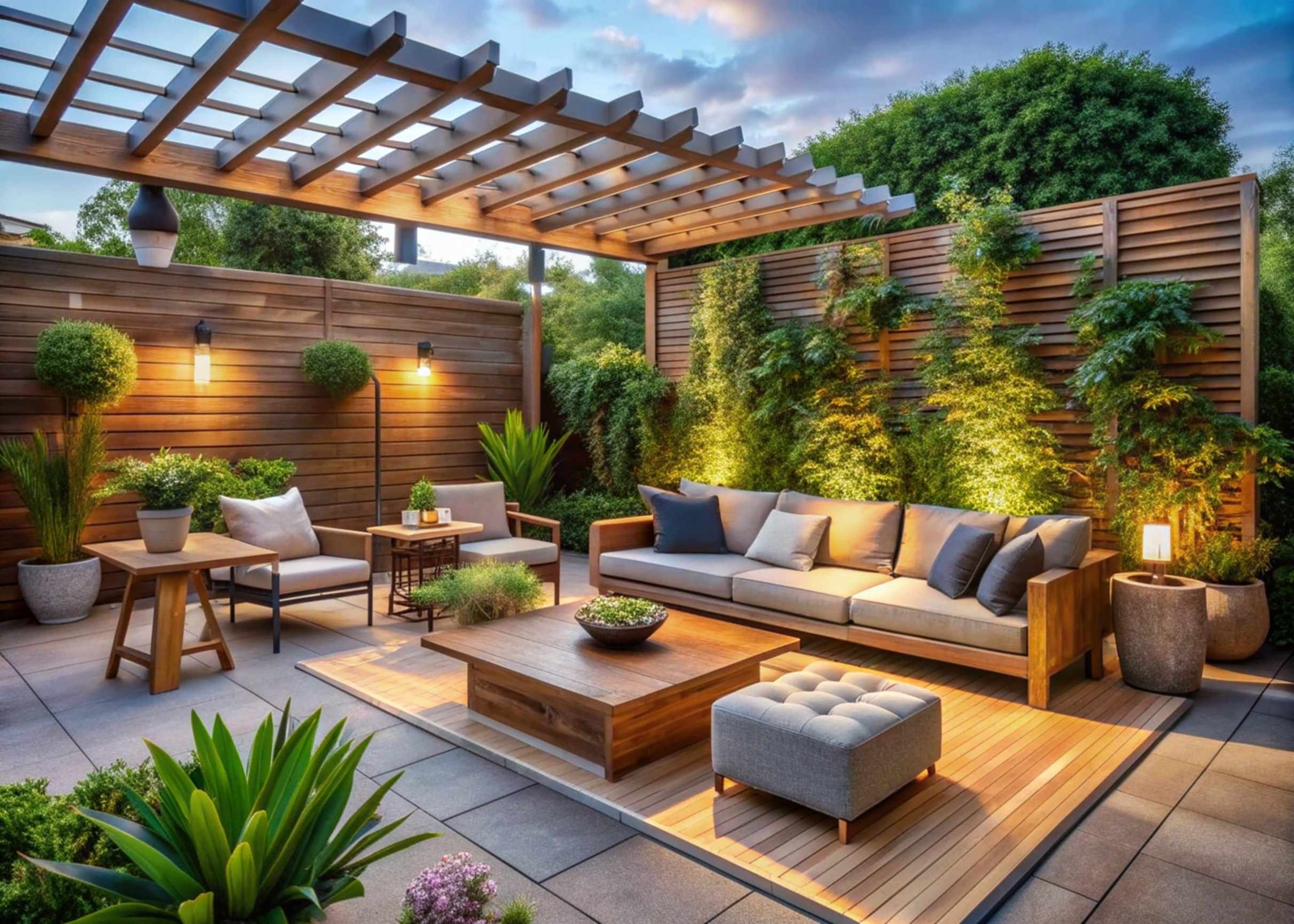
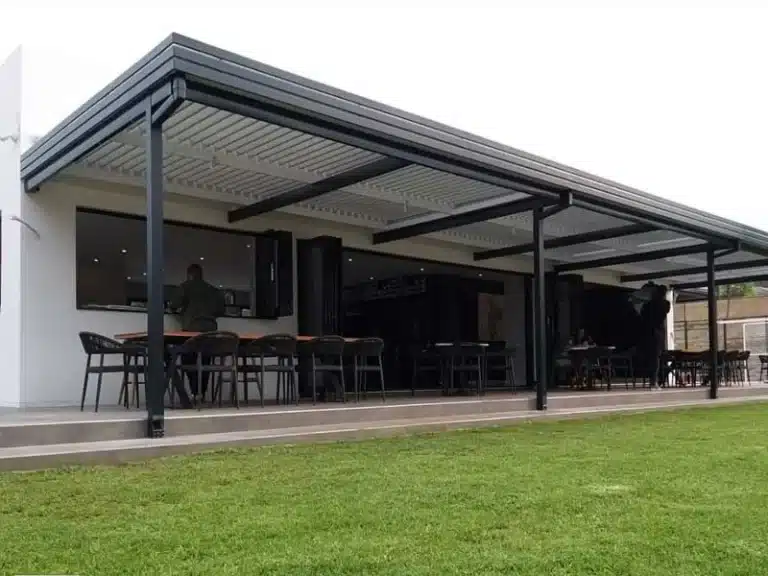
Think of them as a roof you can tune. The aluminium blades sit parallel to each other on a framework, connected by a mechanism that lets them rotate in unison. When the blades are open, you get airflow and filtered light . like a pergola. When they're closed and interlocked, you get something close to a solid roof: shade, rain protection, and reduced heat.
The rotating action is what makes them different from fixed awnings or solid carports. You're not choosing between sun and shelter once . you're adjusting it throughout the day as conditions change. That's the whole point.
How Do Louvre Awnings Differ From Fixed Awnings?
It's the difference between a light switch and a dimmer. A fixed awning (canvas retractable, shade cloth, or solid roof) gives you one state: deployed or retracted, shaded or not. You can't fine-tune it.
With louvre awnings, you've got 120 degrees or more of blade rotation. Morning sun low in the sky? Tilt the blades to block it while letting the breeze through. Midday scorcher? Close them fully for solid shade. Afternoon thunderstorm? Shut them tight. That flexibility is the main reason people pay a premium for louvre systems over traditional shade solutions.
Are Louvre Awnings Waterproof?
This is the million-rand question. The short answer is yes . modern louvre systems from reputable brands are engineered to be weatherproof. The blades overlap and have rubber or neoprene seals along the edges. When closed, they interlock tightly enough to shed most rain.
The systems also include integrated gutter channels that collect runoff and direct it to your downpipes, meaning water doesn't just pour off the edge of the structure. That's a big deal if you've got the awning right next to a doorway or window.
That said, no louvre system is 100% waterproof in a Cape Town storm or Durban cloudburst with hurricane-force side winds. In extreme wind-driven rain, some moisture can be forced between blades. But for 95% of South African weather, they'll keep you dry.
How Much Do Louvre Awnings Cost in South Africa?
Pricing varies significantly based on a few factors:
- Size: Larger projects bring the per-square-metre cost down slightly, but you're still looking at R20,000 to R60,000+ for a covered patio or entertainment area.
- Finish: Standard mill-finish aluminium is cheapest. Powder-coating adds colour and durability but costs more. Timber-look finishes are pricier still.
- Motorisation: Adding a motor with remote control adds roughly R5,000 to R15,000 to the total depending on system complexity.
- Installation: Most quotes include installation. If your site needs extra structural work (bolting into concrete, roof integrations), that adds to the cost.
For a full breakdown of different shade solutions, check out our pergola and awning services page. We'll give you a straight quote based on your space.
Comparison: Louvre vs Solid Roof vs Shade Cloth vs Retractable
| Feature | Louvre Awning | Solid Roof | Shade Cloth | Retractable Canvas |
|---|---|---|---|---|
| Sun control | Adjustable . 0-100% | 100% full shade | 30-90% depending on density | Full or none (open/close) |
| Rain protection | Yes when closed | Full protection | Minimal | Some (depends on fabric) |
| Airflow | Excellent (tilt open) | None (blocked) | Good (breathable) | Moderate |
| Cost per m² | R1,500 - R3,500 | R800 - R1,800 | R200 - R600 | R800 - R2,500 |
| Durability | 20+ years (aluminium) | 20+ years (tiled/tin) | 5-10 years | 8-12 years (fabric dependent) |
| Maintenance | Very low (wipe clean) | Low | Moderate | Moderate |
| Wind rating | 100-120 km/h (closed) | High (structural) | Moderate | Variable (retract in wind) |
| Insulative value | Moderate | High | Low | Low-Moderate |
| Aesthetics | Modern, sleek | Traditional/standard | Utilitarian | Classic/versatile |
Adjustable vs Fixed Louvre Awnings . What's the Difference?
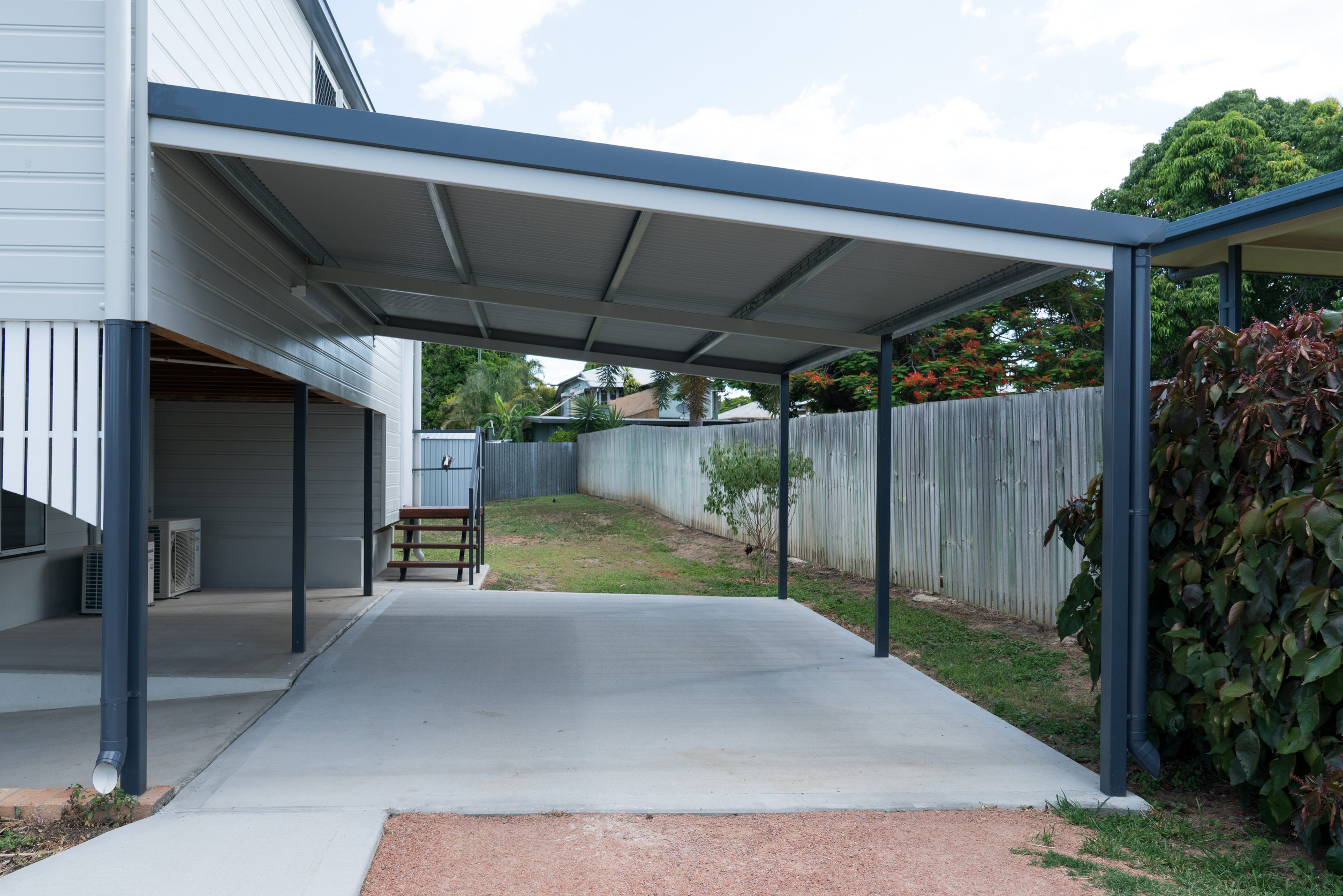
Fixed louvre pergolas are becoming popular in South Africa for carports and modern home features. They look similar to adjustable systems but the blades are locked at a specific angle. They provide partial shade and a clean look, but you can't tune them.
Adjustable systems cost more but give you year-round versatility. Summer afternoon? Blades tilted for airflow. Winter midday? Flat open to let warmth through. Evening braai with friends? Closed for ambience with the option to crack them open for smoke to escape.
If you're building a carport where you just need consistent coverage, fixed might work. For an entertainment area or patio, adjustable is hard to beat.
Manual vs Motorised Louvre Awnings
If your louvre awning covers a small window or a compact area, a manual crank is perfectly fine. It's reliable, mechanical, and nothing to break. You turn the handle, the blades tilt. Done.
But for a large patio cover . say 30m² or more . a manual system gets tedious. You're walking to the crank every time you want to adjust. That's where motorisation shines. With a button on the wall or a remote in your pocket, you adjust the entire roof in seconds.
Higher-end motorised systems integrate with home automation. Sun sensors trigger automatic closure. Wind sensors close the roof when conditions get rough. Rain sensors shut the blades at the first drop. Some systems even track the sun's position and auto-adjust throughout the day.
Our Sun Adjust Louvres range offers both options. We'll help you pick the right balance of convenience and budget.
What Materials Are Used for Louvre Awnings?
Aluminium dominates for good reason. It won't rust in Durban's salty air. It's strong enough to span several metres without sagging. It accepts a high-quality powder-coated finish that resists UV fading. And it's light enough that the rotating mechanism doesn't need heavy-duty components.
The key difference between budget and premium systems often comes down to the aluminium profile. Cheap systems use thin-gauge aluminium that can flex or twist over time. Premium systems use structural-grade extrusions with internal reinforcement ribs. The difference in feel and longevity is noticeable.
Powder coat finish matters too. A quality coating from a reputable applicator lasts 15-20 years in SA sun. Cheap paint jobs start peeling in 3-5 years. When you're getting quotes, ask about the coating warranty.
How Durable Are They in the SA Climate?
South Africa's climate is a stress test for any outdoor structure. Between the Highveld's intense UV, the coast's corrosive salt spray, Gauteng's hailstorms, and the Cape's wind . your shade solution takes a beating.
Aluminium louvre systems handle this well. The powder coating resists UV degradation. Aluminium doesn't rust (unlike steel frame alternatives). The blades are designed to shed water and debris. And in high wind, you close the blades and the structure becomes an aerodynamic low-profile roof.
For Durban specifically . high humidity, salt exposure, and the occasional tropical downpour . aluminium louvres are basically the ideal solution. Better than steel, better than timber, and more weather-proof than canvas or shade cloth options.
Can You Install Louvre Awnings on Existing Structures?
Retrofitting is common. We bolt the support beams into your existing columns or walls, run the framework, and install the louvre mechanism. It's less disruptive than a full demolition-and-rebuild job.
The critical factors are structural integrity and alignment. Your existing structure needs to be square and strong enough to take the load. If it's not, we'll recommend reinforcement before installation. It's worth doing properly . a sagging louvre system looks bad and doesn't function right.
Do You Need Planning Permission for Louvre Awnings?
The rules vary by municipality. Durban (eThekwini) requires building plan approval for covered patios and carports above a certain size. Many homeowners install without permits, but that can cause problems when you sell. A reputable installer will either include permit costs in their quote or guide you through the process.
We always recommend doing it by the book. A few hundred rand in permit fees is better than a R20,000 fine or a fight with your insurance company after a storm.
Why Choose Forever Awnings for Your Louvre Project?
We're based in Durban. We know the local climate, the building codes, and the suppliers that deliver quality. Our Sun Adjust Louvres use structural-grade aluminium with powder-coated finishes, and we offer both manual and motorised options.
We don't do cookie-cutter quotes. We measure your space, discuss how you'll use it, and recommend a system that fits your needs and budget. Whether it's a R25,000 compact patio cover or a R150,000 full entertainment area with integrated lighting and smart controls . we'll build it right.
About the Author
This guide was written by the team at Forever Awnings. With over 21 years of experience designing, manufacturing, and installing custom shade solutions across Durban and Gauteng, we have fitted thousands of louvre, retractable, and fixed awning systems. We do not just write about awnings — we build them.
Frequently Asked Questions About Louvre Awnings
Can louvre awnings be installed on uneven or awkward spaces?
Yes. Modern louvre systems are modular and can be configured for irregular shapes, angled walls, and stepped layouts. The framework is custom-measured to fit your specific space. It's not off-the-shelf . everything's cut to size.
Do louvre awnings reduce heat inside the house?
Absolutely. By blocking direct sunlight before it hits your windows or glass doors, louvre awnings reduce indoor temperatures by 5-10°C in summer. Closed blades with a reflective powder coat provide the best heat rejection.
How do I clean and maintain louvre awnings?
Minimal effort required. A garden hose rinse every few months removes dust and pollen. For stubborn grime, wipe with a mild soap solution and soft cloth. Lubricate the pivot points annually and check the motor (if fitted) per the manufacturer's schedule.
Are louvre awnings noisy in wind?
Quality aluminium louvre systems are designed to minimise wind noise. The blades fit snugly when closed, and the seals prevent rattling. Some wind noise is unavoidable in strong gusts, but a well-installed system is quieter than canvas or shade cloth alternatives.
What colours and finishes are available?
Most aluminium louvre systems are powder-coated in a wide range of RAL colours. Popular choices include white, cream, charcoal, bronze, and black. Wood-grain finishes are available for a warmer aesthetic. The finish choice doesn't just affect looks . lighter colours reflect more heat.
Still got questions? Give us a call or send a message — We're happy to talk through your project.