Retractable Awnings in South Africa: The Complete Guide
Forever Awnings has been installing retractable shade solutions in Durban and Gauteng since 2004. Here's everything you need to know before you buy.
Retractable awnings are the smartest shade solution for most South African homes — They give you shade when you want it, sun when you don't, and they don't block your view. They protect your patio, lower your energy bill, and make your outdoor spaces actually usable in summer.
But there are a lot of options . folding arm, cassette, pergola retractable, manual, motorised, different fabrics, different frame materials. And if you're on the coast in Durban or Ballito, you need to think about salt corrosion and wind in a way that inland homeowners don't.
This guide covers all of it. We'll get you to the right decision for your home.
What Are Retractable Awnings and How Do They Work?
The mechanism is simple but effective. A tubular roller sits inside the housing or on the wall brackets. The fabric wraps around this tube. Folding arms . spring-assisted or motor-driven . push the leading bar away from the wall, unfurling the fabric as they go.
When you don't need shade, the arms fold back and the fabric rolls up, leaving nothing exposed (or in a neat cassette housing, depending on the type). The whole thing tucks away neatly against the wall.
That retraction is the killer feature. Fixed awnings and shade structures are always there . blocking light, trapping heat, covering your view. A retractable awning gives you control. Sun out? Extend it. Storm coming? Pull it back.
Folding Arm vs Cassette vs Pergola Retractable . What's the Difference?
| Feature | Folding Arm | Cassette Awning | Pergola Retractable | Fixed Awning |
|---|---|---|---|---|
| Fabric protection when retracted | Exposed | Full enclosure | Rolled between beams | N/A (always deployed) |
| Wind rating | Medium (30-50 km/h) | Medium-High (40-60 km/h) | High (50-80 km/h) | Variable |
| Price (installed, 4m width) | R12,000 . R25,000 | R22,000 . R45,000 | R35,000 . R80,000 | R8,000 . R20,000 |
| Aesthetics when retracted | Visible arms and fabric | Clean, neat box | Pergola structure visible | Always visible |
| Best location | Sheltered patios, low wind areas | Coastal, exposed, high-end homes | Entertainment areas, windy sites | Covered areas, carports |
| Fabric replacement cost | Lower (simple fabric swap) | Moderate (more labour) | Higher (custom panels) | Lowest |
| UV resistance | Fabric-dependent | Better (protected when retracted) | Good (fabric shaded by beams) | Continuous exposure |
Folding Arm Awnings
These are the workhorses of the awning world. They're simple, affordable, and available in countless sizes and colours. The arms fold down when retracted and extend outward when deployed. The fabric is visible when rolled up, which some people don't love. But they're proven, reliable, and offer the best value per square metre of shade.
Cassette Awnings
A cassette awning is a folding arm awning with a protective box that encloses the fabric and arms when retracted. This is the premium option for coastal properties. For extra protection, pair it with outdoor roll down blinds — the fabric stays protected from salt spray, humidity, and UV when you're not using it. The look is cleaner too: just a neat box against the wall.
Pergola Retractable Systems
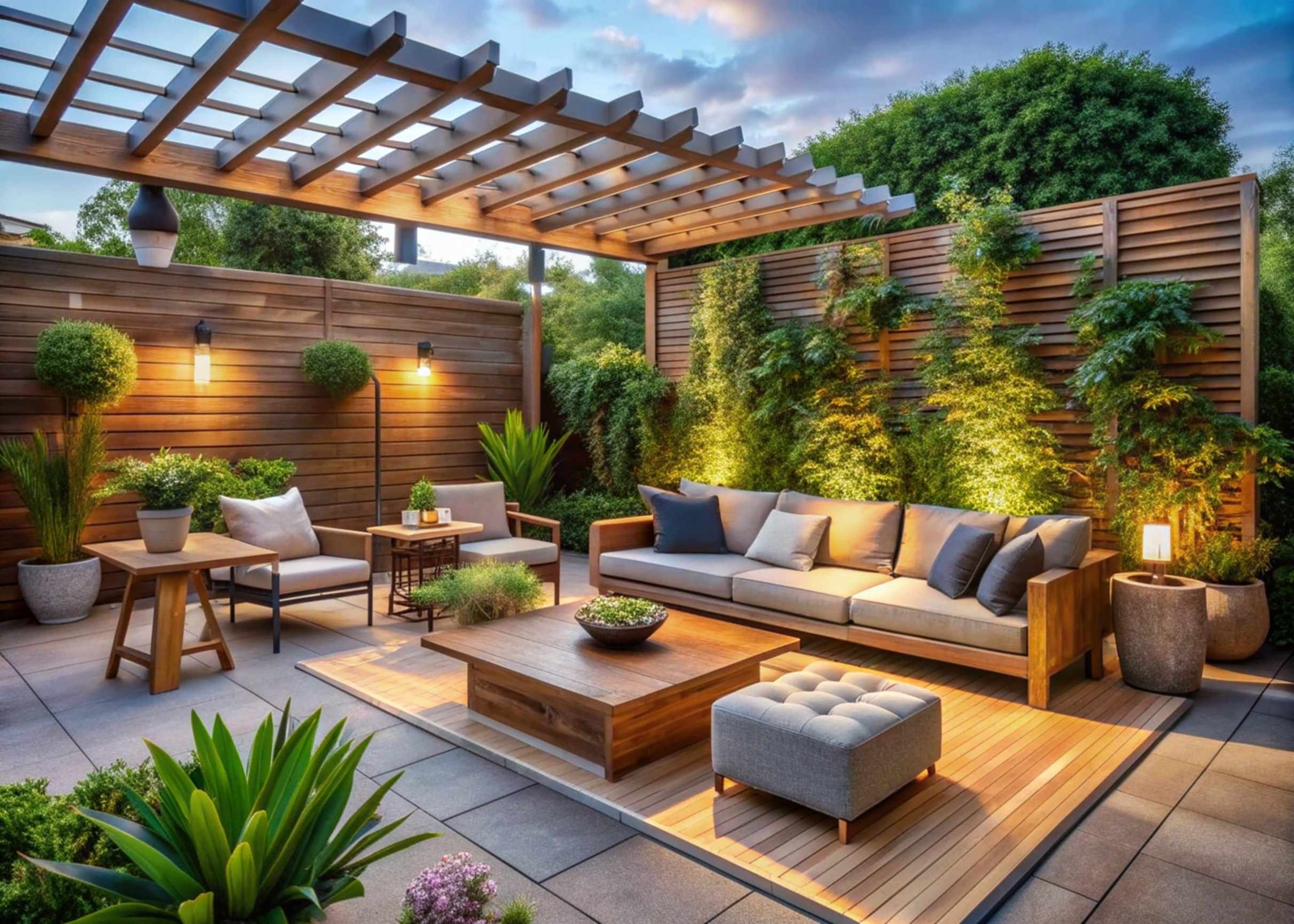
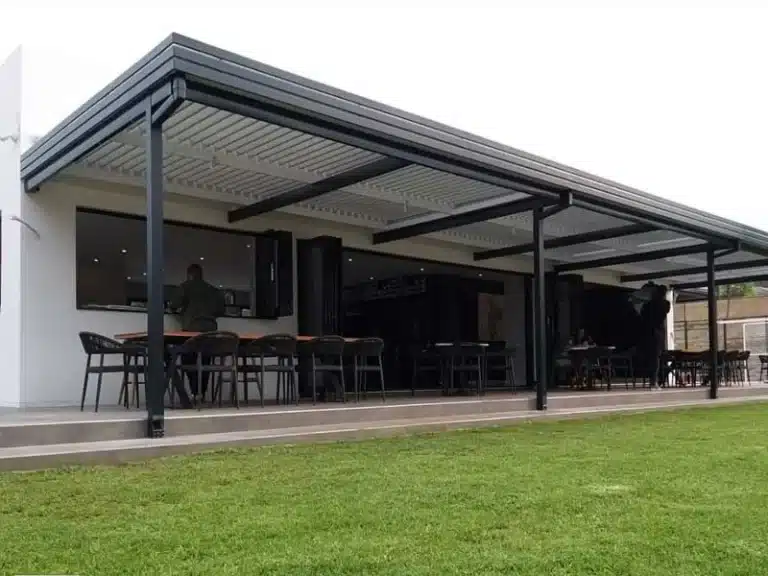
These combine a fixed pergola structure with retractable fabric panels that slide or roll between the beams. They're the most expensive option but offer the best wind performance and a substantial look. Popular in high-end homes and commercial spaces where aesthetics matter as much as function.
Retractable vs Fixed Awnings . Which Is Better?
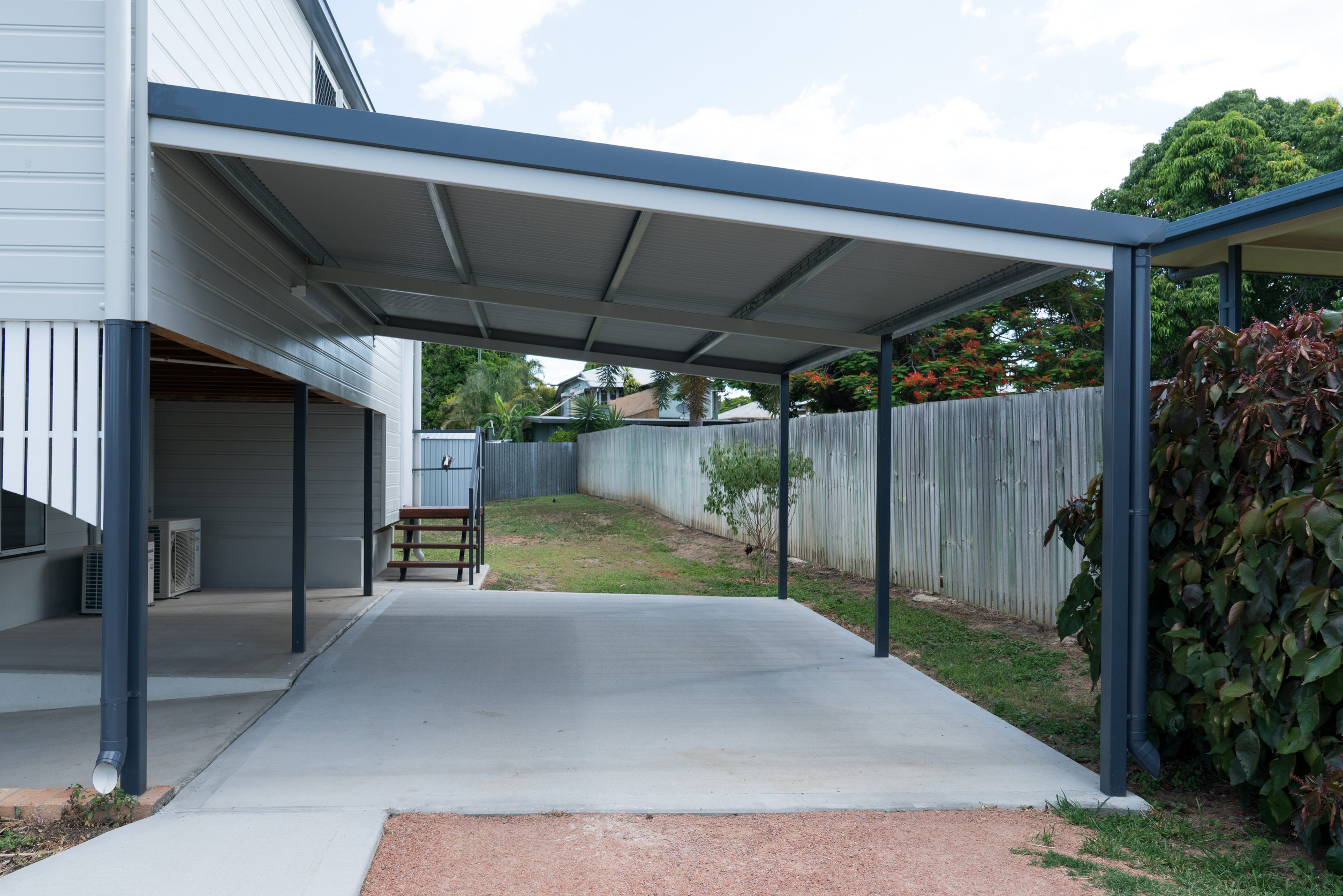
The argument for fixed awnings is straightforward: they're cheaper and they always work . no moving parts, no mechanism to break, no need to retract in bad weather. Solid roof carports, shade cloth structures, and fixed pergolas are all valid solutions.
But the argument for retractable is that you can't un-shade a fixed roof. On a winter's day in Johannesburg, you might want that warm sunlight flooding your patio. A retractable awning gives you both options. For most South African homes . where the same patio is used for summer braais and winter afternoon sun . retractable is the better choice.
Motorised vs Manual Operation
The deciding factor is how often you'll extend and retract the awning. If it goes out in the morning and comes in at night . every day . a motor is a serious convenience upgrade. Add a wind sensor and sun sensor, and you've got an awning that manages itself.
Motorised awnings also work well with smart home systems. You can schedule them to deploy at certain times, link them to weather forecasts, or control them from your phone. Somfy (the most common motor brand in SA) offers several compatible systems.
Can Retractable Awnings Withstand Wind?
Wind is the biggest risk for retractable awnings. The fabric acts like a sail. In high winds, the arms can bend, the fabric can tear, or the mounting brackets can pull out of the wall. Every awning sold in SA should come with a wind rating, and you should respect it.
Motorised awnings with integrated wind sensors automatically retract when wind speeds exceed a safe threshold. This isn't a luxury . it's protection for your investment, especially in coastal areas where wind conditions change fast.
Durban and Coastal Considerations
If you live in Durban, Umhlanga, Ballito, or anywhere along the KZN coast, your retractable awning needs to be specified differently than an inland installation. Here's why:
- Salt corrosion: Standard steel frames rust rapidly in coastal air. Aluminium frames with stainless steel hardware are non-negotiable.
- Humidity: Fabric stays damp longer, increasing mould risk. Choose solution-dyed acrylic with anti-mould treatment.
- Wind: Durban's afternoon sea breezes and summer storms demand a wind sensor if you go motorised.
- UV intensity: Coastal UV is intense. Don't cheap out on fabric . premium acrylic lasts 3x longer than polyester before fading.
- Cassette recommended: A cassette awning that encloses the fabric when retracted protects it from salt spray and moisture.
We install in Durban and surrounds. We know what works here and what doesn't. Get it right the first time.
What Fabric Is Best for the SA Climate?
Here's a quick fabric comparison:
| Fabric Type | UV Resistance | Lifespan | Cost | Best For |
|---|---|---|---|---|
| Polyester/PVC-coated | Low . fades in 2-4 years | 3-6 years | Low | Budget installations, temporary shade |
| Acrylic (standard) | Good . 5-7 years colour fast | 7-10 years | Medium | Residential patios, most homes |
| Solution-dyed acrylic | Excellent . 8-10 years colour fast | 10-15 years | Medium-High | Coastal areas, premium homes |
| PVC membrane (tensioned) | Very good . 8-12 years | 12-20 years | High | Commercial, large spans, pergola systems |
How Long Do Retractable Awnings Last?
The frame is a decades-long investment. Spend well on a powder-coated aluminium frame, and you'll be replacing fabric every 8-12 years . not replacing the whole awning. That's a much more economical approach than buying a cheap awning that needs full replacement after 5 years.
Fabric replacement is straightforward on most systems. The old fabric gets cut off the roller, new fabric is cut to size and tensioned. Labour and materials typically run R3,000-R8,000 depending on fabric quality and awning size.
How to Choose the Right Retractable Awning for Your Home
SA Homeowner's Retractable Awning Buying Checklist
- Location: Coastal (Durban, Cape Town) → aluminium frame, cassette housing, anti-mould fabric. Inland (Joburg, Pretoria) → more options available.
- Exposure: Windy site? → Wind-rated system, cassette or pergola retractable, wind sensor.
- Size: Measure width and projection. Wider than 5m? → Motorised recommended. Projection over 3m? → Stronger frame needed.
- Fabric: Choose solution-dyed acrylic. Avoid polyester for any permanent installation.
- Operation: Small awning (under 3m) → manual is fine. Large or daily use → motorised.
- Sensors: Motorised? Add a wind sensor. Seriously. It's R1,500-R3,000 well spent.
- Installation: Professional installation only. A poorly mounted awning is dangerous in wind.
- Warranty: Frame (min 5 years), fabric (min 5 years), motor (min 3 years).
What Sizes Do Retractable Awnings Come In?
The width is the distance between the wall brackets. The projection is how far the awning reaches out. Standard sizes exist for both, but most reputable manufacturers offer custom sizing within reasonable limits.
For a standard SA patio, a 4m wide x 3m projection awning is typical. That covers a braai area or outdoor dining set comfortably. For windows and doors, 2-3m width with 1.5-2m projection is common.
How to Measure for a Retractable Awning
It's worth getting a professional to measure. Awnings that are too wide won't fit between brackets. Awnings that are too narrow leave gaps and look odd. Projection that's too long means the awning sits too low at the front.
General rule: the projection should be roughly half the mounted height. If your awning is mounted 3m up, 1.5m projection is a comfortable angle that clears doorways and headroom.
Retractable vs Fixed: Quick Decision Guide
| Use Case | Best Solution | Why |
|---|---|---|
| Patio / entertainment area | Retractable awning | Flexible shade . use it when you need it, open when you don't |
| Carport / vehicle cover | Fixed roof or shade cloth carport | Needs permanent protection, no value in retraction |
| Window / door shade | Retractable awning | Block sun when needed, let light in when it's cool |
| Commercial / restaurant | Pergola retractable or cassette | Durability, wind rating, and aesthetics matter more |
| Poolside / braai area | Retractable awning | Shade during hot hours, open for evening sun |
| Balcony (apartment) | Cassette retractable | Compact storage, neat look, wind-resistant |
Ready to Get Your Retractable Awning?
We've installed hundreds of retractable awnings across Durban, Gauteng, and the South Coast. We know what works, what doesn't, and which brands hold up in SA's conditions.
Our canvas and retractable awning service covers every type . folding arm, cassette, and pergola retractable systems. We supply, install, and warranty everything we fit.
For pricing details across all types and sizes, check our comprehensive awning cost guide.
About the Author
This guide was written by the team at Forever Awnings. With over 21 years of experience designing, manufacturing, and installing custom shade solutions across Durban and Gauteng, we don't just write about awnings — we build them.
Frequently Asked Questions About Retractable Awnings
Can retractable awnings handle hail?
No. Hail can damage the fabric and the mechanism. If there's a hail warning, retract the awning immediately. Motorised awnings with smart sensors can't detect hail, so you'll need to monitor weather forecasts. Fabric may need replacement after significant hail damage.
Do retractable awnings add value to my home?
Yes. A quality retractable awning that's properly installed adds usable outdoor living space, protects windows and doors from UV, and reduces energy costs. These are attractive selling points for potential buyers in SA's climate.
Can I install a retractable awning myself?
You can, but we don't recommend it. The brackets must be bolted into structural brickwork or concrete with proper fixings. Incorrect installation can lead to the awning pulling out of the wall in wind, causing property damage or injury. Professional installation is worth the cost.
How do I clean my retractable awning fabric?
Hose down with water to remove loose dust. For stains, use a soft brush with mild soap and water . never bleach or harsh chemicals. Let the fabric air dry fully before retracting to prevent mould. Most quality acrylic fabrics are treated for easy cleaning.
What colours are available for retractable awnings?
Fabric colours range from classic creams and whites through greys, beiges, blues, greens, reds, and striped patterns. Frame colours are typically white, cream, grey, or black. The most popular SA choices are cream/white for light reflection and charcoal/grey for a modern look.
Are retractable awnings noisy in wind?
Some flapping is normal in moderate winds. Quality fabric and proper tensioning minimise noise. If your awning flaps excessively, it may not be tensioned correctly. A motorised awning with wind sensor solves the problem . it retracts when wind picks up.
Still deciding? Talk to our team — We'll help you pick the right awning for your home and your budget.