Shade Cloth Carports in South Africa: The Complete Guide
If you have priced up a steel carport lately, you already know the sticker shock. A double-car metal structure with IBR sheeting runs R30,000 to R60,000 installed, and that is before you factor in the heat trap underneath. Park your car under one on a Durban summer afternoon and the interior is still an oven — the metal absorbs heat and radiates it straight down.
A shade cloth carport solves both problems. It costs roughly half as much and keeps the space underneath genuinely cooler. The fabric blocks UV but lets heat escape through the weave. And because the wind blows through rather than against it, the structure holds up better in open areas than a solid roof would. This guide covers everything you need to know before you decide.
At Forever Awnings, we have been installing shadeports in Durban, Ballito, Umhlanga, and across Gauteng for over 21 years. These are the real numbers and real trade-offs, not marketing fluff.
What Is a Shade Cloth Carport?
The fabric is not a tarpaulin. It is engineered shade fabric with UV stabilisers woven into the material. You can get different densities (80%, 90%, 95% UV block) and colours that match your house. The frame is typically galvanised steel or powder-coated aluminium, bolted to a concrete base or anchored into existing paving.
It is not waterproof. If you need to keep rain off completely, you need a solid roof. But if your goal is keeping your car cool and protecting the paintwork from the African sun, a shadeport does the job better than any solid structure.
Shade Cloth vs Metal Carports: Which Is Better?
| Factor | Shade Cloth Carport | Metal / IBR Carport |
|---|---|---|
| Underneath temperature (summer) | 5-10°C cooler than ambient due to airflow | 15-25°C hotter than ambient (greenhouse effect) |
| UV protection | 80-95% block | 100% block |
| Wind resistance | Excellent — wind passes through the fabric | Moderate — acts as a sail in open areas |
| Waterproof | No — fabric breathes | Yes — solid sheeting |
| Installation cost (double car) | R15,000 — R30,000 | R30,000 — R60,000 |
| Lifespan (fabric) | 8-12 years fabric, 15-25 years frame | 20-30 years |
| Maintenance | Rinse occasionally | Paint every 5-8 years if steel |
| Best for | Parking, pool areas, patio covers | Workshops, storage, full weather protection |
How Much Does a Shade Cloth Carport Cost in South Africa?
The price depends on three things: span width, frame material, and fabric density. A standard single-car port for a residential driveway is on the lower end. A double-car port spanning 6 metres needs thicker steel and more engineering — that pushes the price up. Premium fabric with 95% UV block costs more than basic 80% fabric, but the difference is a few thousand rand over a decade of use.
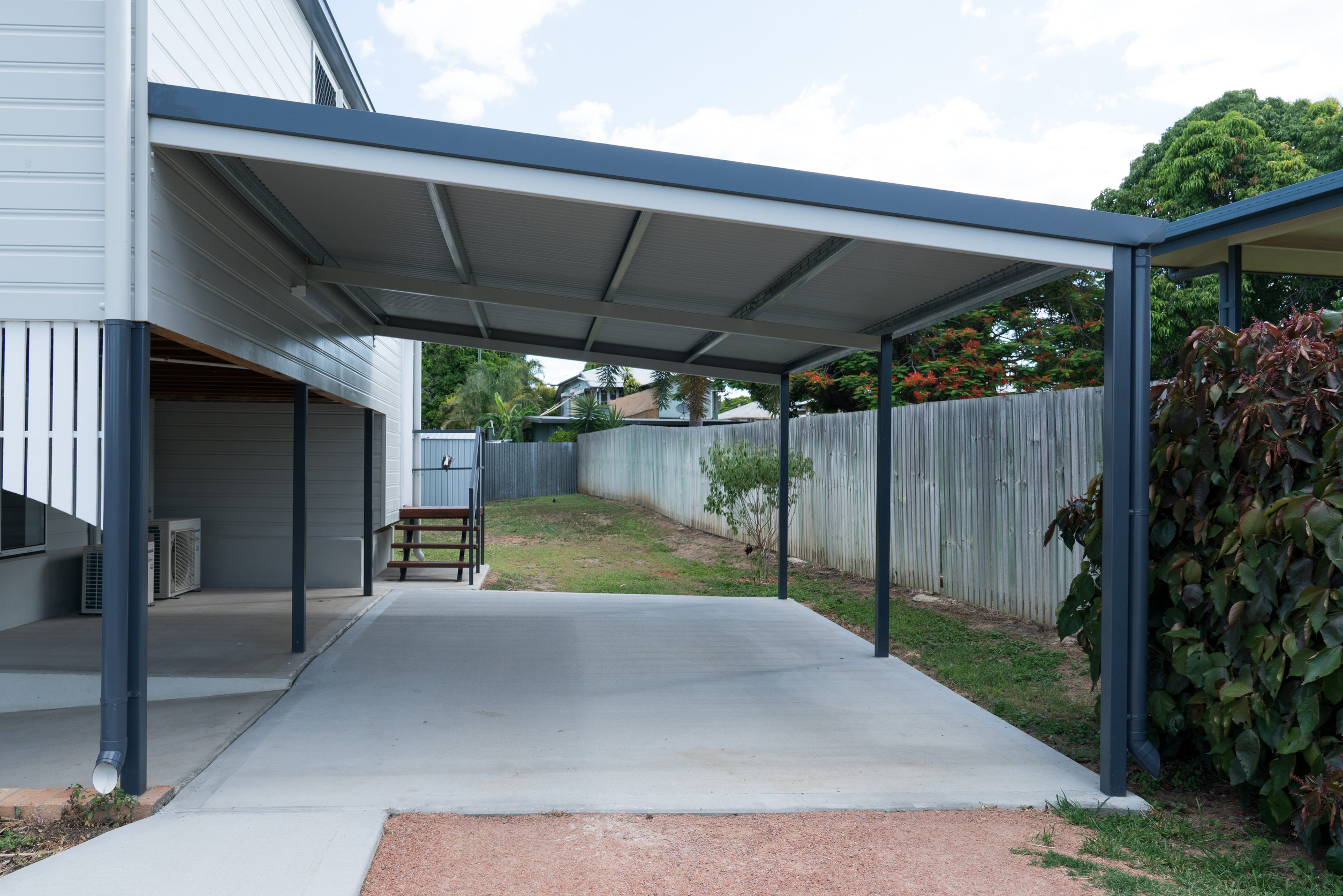
Compare that to a metal carport. A comparable double-car steel structure with IBR sheeting and a painted frame runs R30,000 minimum. If you add box gutters, fascia boards, and downpipes, you are looking at R45,000+. That is double the cost of a shadeport for a result that is worse at keeping the car cool.
For a precise quote on your specific driveway, request a free site assessment — we measure, quote, and install.
Are Shade Cloth Carports Wind and Hail Resistant?
This is one of the biggest misconceptions about shadeports. People see "cloth" and assume it will rip in the first storm. The reality is the opposite. A properly tensioned shade cloth panel handles wind better than a solid roof because there is no surface area for the wind to push against. In coastal areas like Durban and Ballito, shadeports consistently outlast solid metal structures in open, exposed positions.
The frame needs to be engineered for your specific location. A shadeport in a sheltered Umhlanga garden needs a lighter frame than one on an exposed plot in the Durban North ridge. This is where local experience matters — we do not use a one-size-fits-all frame spec.
Why Shade Cloth Works So Well for SA's Climate
South Africa sits in the high-UV belt. Our UV index regularly hits 11+ in summer — classified as "extreme." The primary threat to your car is not rain, it is UV radiation. Fading dashboard, cracked leather seats, peeling clear coat on the paint — all UV damage.
Shade cloth carports are designed for exactly this. The fabric blocks 80-95% of UV while reflecting a significant portion of the remaining solar radiation. Your car stays cool enough that you can get in and drive without burning your hands on the steering wheel — not something you can say about a car parked under a metal roof that has been baking all day.
In Gauteng, the additional threat is hail. A shadeport wins here too — the hail passes through the fabric or bounces off without damage. Metal and polycarbonate roofs dent and crack, and replacing a full roof sheet is expensive.
Where You Can Install a Shadeport
Common installations we handle:
- Home driveways — single or double-car shadeports attached to the house wall or freestanding
- Poolside shade — protecting pool pumps, equipment, and providing changing area cover
- Commercial parking — staff parking, client parking at offices and retail centres
- Agricultural — tractor and implement storage, livestock feeding areas, hay cover
- Schools and churches — covered parking for staff and visitors
Shade Cloth vs Carports — What is the Difference?
If you are comparing different protection options, here is how they stack up:
- Shade cloth carports — best value, best heat management, wind-resistant, not waterproof
- Steel and aluminium carports — full weather protection, higher cost, heat trap in summer
- Retractable patio awnings — for entertainment areas, not for vehicles
Frequently Asked Questions
Can I walk on a shade cloth carport?
No. Shade cloth is not a load-bearing surface. You cannot walk on it, and you should not store anything on top of it. It is designed for shade, not structural support.
Does a shade cloth carport need planning permission?
In most South African municipalities, a shadeport under 30m² on a residential property does not need planning permission. But check with your local authority or body corporate — some estates and coastal conservation areas have specific rules.
Can I attach a shadeport to my house wall?
Yes. Wall-mounted shadeports are common and save on frame costs. The wall needs to be structurally sound — brick or concrete, not plasterboard or cavity wall. We assess the fixings during the site visit.
How long does installation take?
A standard residential shadeport takes one to two days. Day one is frame installation and concrete setting. Day two is fabric tensioning and finishing. Commercial installations take longer depending on size.
Does shade cloth fade over time?
Quality UV-stabilised fabric will fade gradually over 8-12 years. The colour shift is even across the whole panel, not patchy. Basic non-UV fabric fades within 2-3 years — we only install UV-stabilised fabric, and the difference is noticeable.
Can shade cloth carports handle load-shedding?
Shadeports are entirely manual structures — no motors, no electronics. Load-shedding does not affect them at all. If you add retractable shade cloth panels on a motorised system, battery backup keeps them working when the grid goes down.
About the Author
This guide was written by the team at Forever Awnings. We have been installing shadeports, carports, and awning systems in Durban and Gauteng since 2004. Every installation is owner-supervised, every structure is custom-engineered for the site, and every product comes with a workmanship guarantee. We do not just sell shade — we build it.